A kick & bass instrument
KerBy
Kick and bass,
reimagined.
Hold a note to get a pattern going, or write each hit in your DAW. Draw your own sounds, bring in samples, and shape how the kick and bass work together.
Coming soon · v0.9.0 macOS 11+ · AU / VST3 / Standalone Windows 10+ · VST3
Start with a rhythm
Hold a note. Or place every hit.
Live Play a pattern
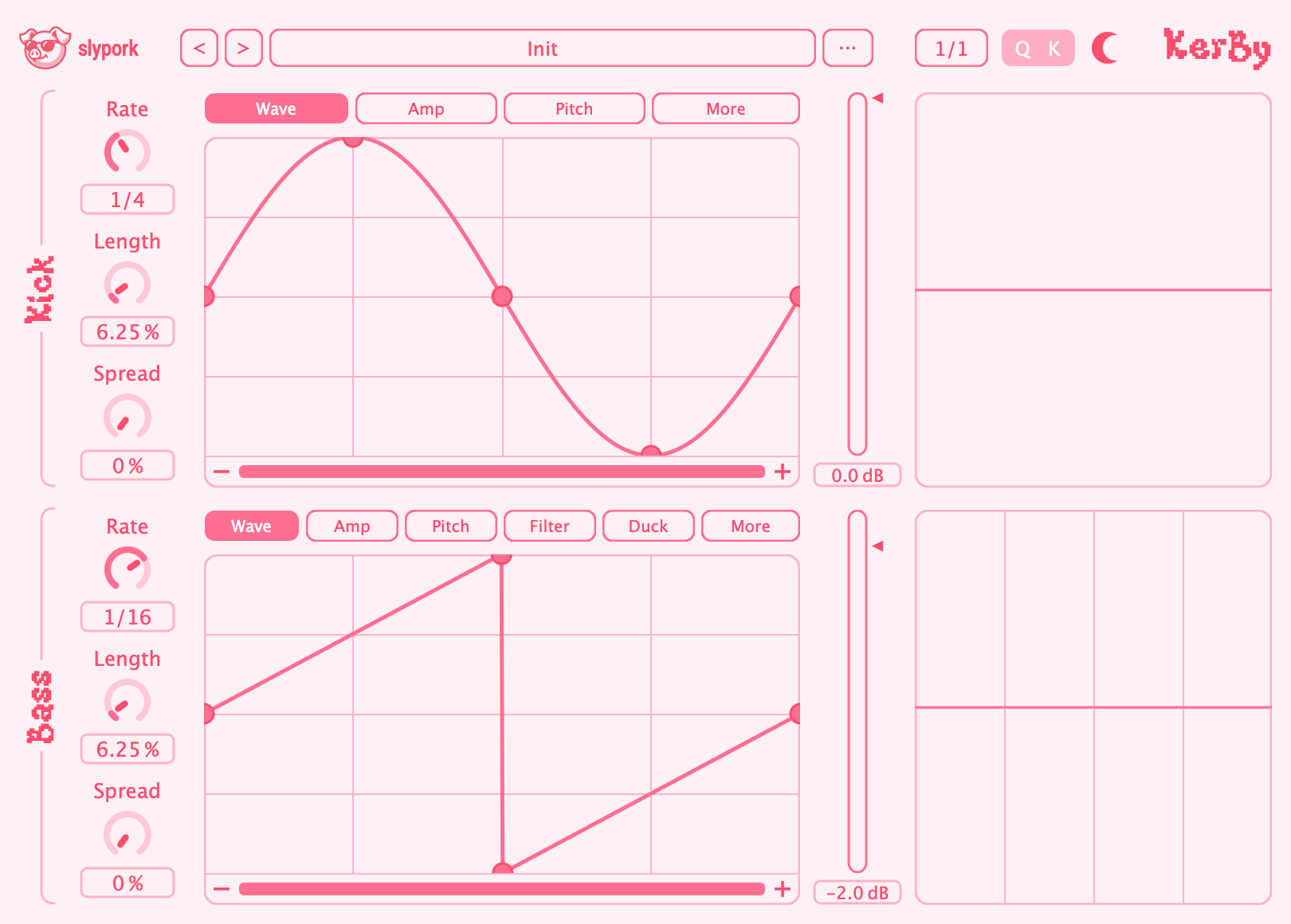
Hold a MIDI note and each voice repeats at its own rate, in time with your DAW. Turn Rate for a stutter, then land back on the main pulse with the home button.
Draw Write it in
Write the rhythm in your DAW’s piano roll. Each MIDI note triggers both kick and bass.
For more variation, use the bass step row to leave gaps, change the pitch of a step or stretch one into a longer note. Or turn up Glitch and let it break the pulse into rolls.
Give it a sound
Draw a wave. Drop a sample.
Start from a preset or draw the waveform itself. Shape each hit with amplitude, pitch and filter curves.
Drop an audio file onto either voice to use a sample instead. The kick’s separate Click layer lets you add a sampled attack on top.
Push it further with FM, saturation, noise and downsampling, or explore a low rumble with the kick’s reverb.
Bring them together
Shape the kick and bass together.
Change the kick’s length, the bass rhythm or the way one gives way to the other, and hear what it does to the whole groove. Ducking is on by default, and the timing controls let the bass follow the kick or run at its own pace.
Draw a different ducking curve, let the rhythms drift apart, or turn the duck off. The voices are called Kick and Bass, but the sounds and patterns can go well beyond either.
Make it move
Macros, LFOs and your own shapes.
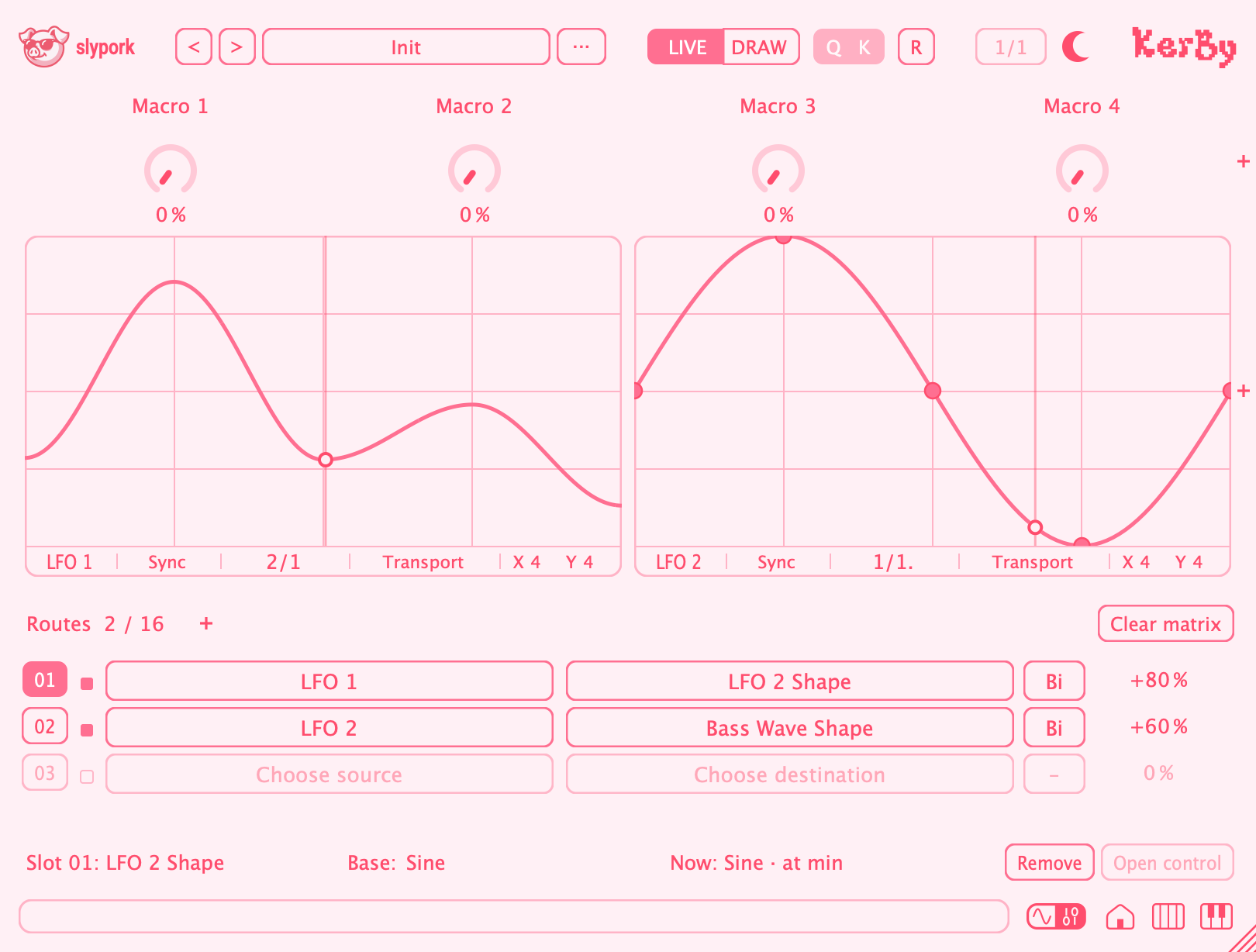
The Matrix page routes macros, LFOs and the envelopes you’ve drawn to controls on either voice. One macro can reshape the kick and bass together, and an LFO can move the bass in time with the track.
Runs on macOS 11 or later, Apple Silicon or Intel, and 64-bit Windows 10 or later. What you need
KerBy ships unlocked: no key, no activation. Read the licence